
On slowness, the weight you are carrying, and the race that was never even.
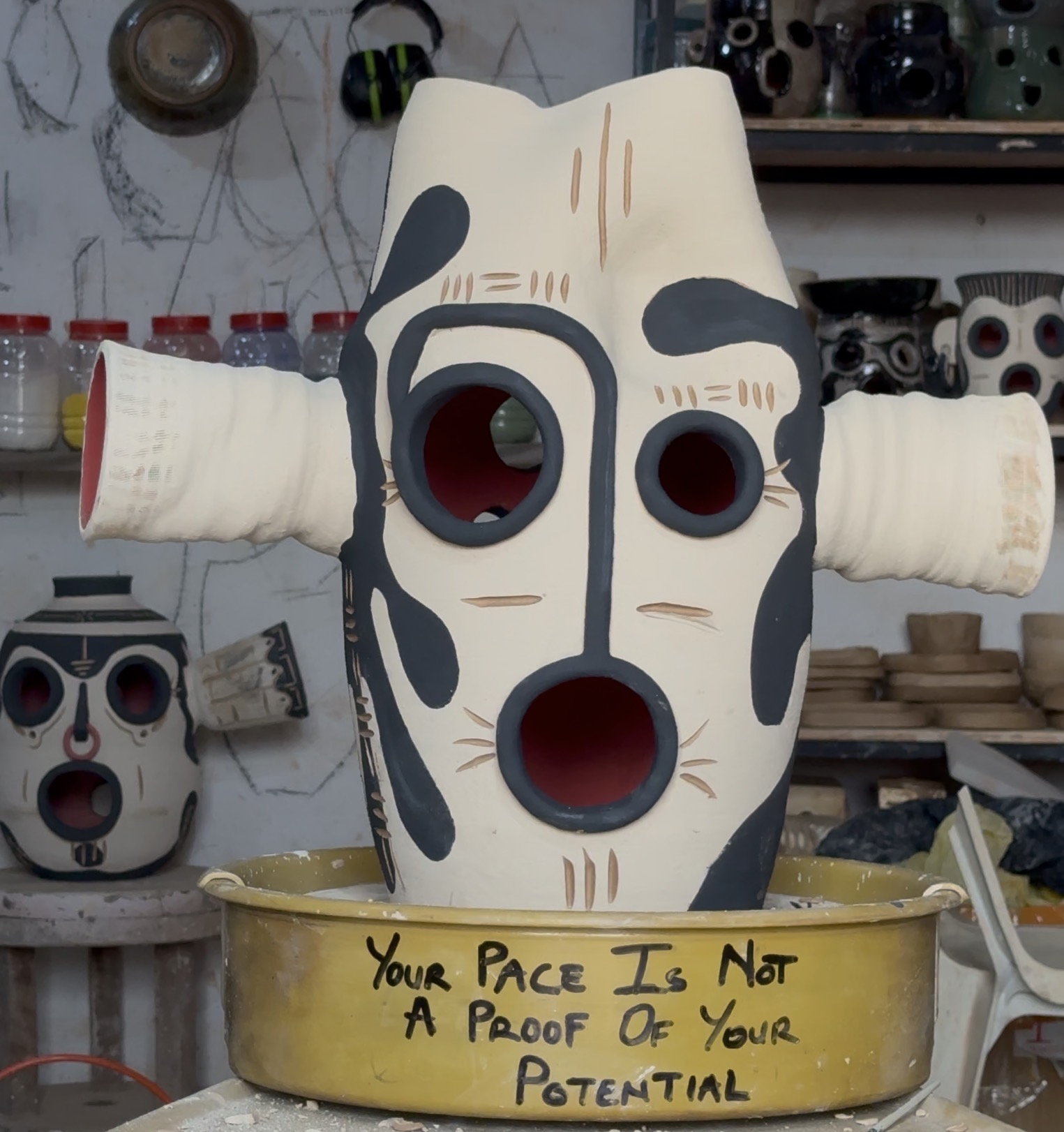
You have been reading your speed as a verdict.
Somewhere along the way you started treating how fast your life is moving as evidence of what you are worth, and every time you watch someone your age arrive somewhere you have been walking toward for years, the same sentence surfaces in you. They must have something I lack. It is one of the most common conclusions a person ever draws about themselves, and it is drawn from evidence that proves something else entirely.
Your pace measures three things. Your capacity is none of them.
The first is your load. Put two people of identical ability on the same road and hand one of them a heavy pack, and they will not arrive together, and the difference between their arrival times will say nothing at all about their legs. You already know what you are carrying. The family that eats because you work. The debt that was waiting for you at eighteen. The parent who needs you on the phone at midnight. The body that runs at half power on the bad weeks. The years you spent healing from something that happened to you and was never your doing. The person who passed you on the road may simply be carrying less, and speed under no weight is only lightness wearing the costume of strength.
Turn this around and see it properly, because you have had it upside down for years. Moving slowly while carrying weight is a demonstration of power. If you are still going, at any speed at all, while holding what you hold, the correct reading of that is not weakness. Take everything off your back for a single month and see what your true pace looks like. You have never once run this race unburdened, and you have been comparing your times to people who have.
The second thing your pace measures is the size of what you are building.
Small things finish fast. A person can begin something in January and hold the finished thing in their hands by March, and everyone will see it, and everyone will call them productive. Something large behaves differently. It takes years, and for most of those years it looks like nothing at all, because the foundation is underground where no one can admire it. A person building a ten-year thing will look like a failure for nine of them. That is arithmetic rather than judgment.
Ask yourself honestly what size the thing you are attempting actually is. If you are trying to master a craft, change a family line, build something that has never existed in your country, heal something that took twenty years to break, then a slow decade is the correct speed and not a symptom of anything. Some things cannot be done quickly by anyone, however gifted. You are measuring a cathedral by the schedule of a shed.
The third thing your pace measures is your conditions, and this is the one nobody says out loud.
People do not begin at the same line. One person leaves school with a name that opens doors, contacts who answer, and a house to fall back into if the first attempt fails. Another leaves with none of that, and every door has to be built before it can be opened, and there is no floor beneath them if they fall. Both of them work hard. One arrives at thirty and one arrives at fifty, and the world looks at the difference and calls it talent. Timing does the same thing. The same idea in a different year is either genius or a waste of five years, and the person who happened to be standing there when the moment turned rarely understands that this is what happened to them.
Nothing about this is a reason to stop. It is a reason to stop using a rigged measurement to decide what you are made of.
Notice, too, what you are actually comparing when you compare. You are holding your entire process against their single result. You see the arrival and you never see the timeline. You did not see the years they spent invisible, the version of the thing that failed, the help they were handed, the cost that came with the speed. You are watching the highlight and calling it their whole life, then setting your unedited footage beside it and finding yourself lacking. No honest verdict has ever come from that comparison.
And speed carries a bill that arrives later. Things built fast often skip the parts that hold weight, and the person who rose in two years frequently spends the next five rebuilding what should have taken four to begin with. There are people ahead of you right now who will have to come back and do it again properly. You will never see that part, because arrivals are announced and repairs are handled privately.
Here is what I want to leave with you, and I will give it to you in two halves, because you need both.
The first half is the comfort, and it is true. Your slowness has been telling you a story about your worth that it has no authority to tell. Speed measures weight and scale and circumstance, and it always has. You are not late, and you are not lacking, and the years that felt wasted were mostly spent carrying things that other people never had to carry at all. If you set your life beside a person who started closer, with less on their back, building something smaller, and concluded that they were more capable than you, then you drew a conclusion the evidence never supported. Put that down. It has cost you enough already.
The second half is harder, and you need it more.
Slow is fine. Stopped is not. Everything I have told you becomes poison the moment you use it as a reason to stay exactly where you are, and this is precisely what a certain kind of person does with an idea like this one. Your load explains your speed. It does not excuse a decade of standing still. Your conditions were unfair. They do not do the walking for you. There is a real difference between a person moving slowly under great weight and a person who has stopped moving and found an intelligent way to describe it, and only you know, in the honest hour before sleep, which of those two you have been.
The only question that ever predicted anything is whether you are still moving. Not your speed. Not your position. Not how you compare to a person whose road you have never walked. Direction and motion, and nothing else, and both of those are entirely yours regardless of what you are carrying.
Keep going. Slowly is a perfectly good way to arrive.
With the, Idris (Clay Of Lagos)